
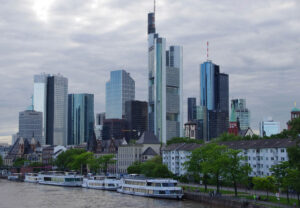
Germany, Europe’s largest economy, is facing another challenging period as weak growth, high energy costs, and structural pressures continue to weigh on economic performance. While there are some signs of stabilization, current forecasts suggest that a strong recovery remains uncertain.
According to recent economic assessments, Germany’s gross domestic product (GDP) is expected to grow by only around 0.5% in 2026. For 2027, experts are forecasting slightly stronger growth of approximately 0.8%. These figures represent a downward revision from previous expectations. In November 2025, the German Council of Economic Experts had still projected GDP growth of 0.9% for the current year.
One of the main reasons for the weaker outlook is the impact of rising energy prices following the war in Iran. Higher oil and gas prices have added further pressure to an economy that was already struggling with weak industrial activity. Germany’s manufacturing sector, traditionally a key driver of economic growth, has been particularly affected. Expensive energy has increased production costs, reduced competitiveness, and discouraged companies from making new investments.
In addition to energy costs, rising social security contributions are creating further challenges. Higher labour costs put additional pressure on companies, while lower disposable income affects consumer spending. Together, these factors are limiting both business investment and household demand.
However, not all developments are negative. Government spending related to defence and infrastructure could provide some support for economic activity. Public investment may help stimulate demand in the short term and improve infrastructure capacity in the longer term. The challenge for policymakers is finding the right balance between supporting growth and maintaining sustainable public finances.
Business confidence indicators show some signs of stabilization. After a significant decline in March and April 2026, business sentiment improved slightly in May. The IFO Business Climate Index increased from 84.5 points in April to 84.9 points in May. Companies reported slightly better assessments of their current situation, and expectations for the coming months became somewhat less pessimistic. However, the improvement remains limited and does not yet indicate a clear economic turnaround.
Another important factor in Germany’s economic debate is the role of government spending. The government expenditure ratio, which measures total public spending as a share of GDP, reached 50.2% in 2025, according to the European Commission. This was slightly above the European Union average of 49.6% and significantly higher than several other major economies, including the United Kingdom, Japan, and the United States.
Germany’s relatively high level of public spending reflects extensive social security systems and government responsibilities. At the same time, critics argue that the size of the public sector may reduce economic flexibility and increase the burden on businesses and taxpayers.
The country also faces challenges regarding labour costs and investment attractiveness. According to OECD data, the combined burden of income taxes and employee and employer social security contributions for a single worker reached 49.3% in 2025. This placed Germany second highest among OECD member states, behind only Belgium, and well above the OECD average of 35.1%. Compared with countries such as the United Kingdom and the United States, Germany’s labour-related tax burden remains significantly higher, which may influence decisions by international companies when choosing investment locations.
Inflation, however, has shown some improvement. In May 2026, consumer prices were 2.6% higher than a year earlier, down from 2.9% in April. The decline followed the introduction of a fuel rebate, which according to the Bundesbank reduced inflation by around 0.25 percentage points. Lower crude oil prices, supported by hopes of a reduction in tensions in the Middle East, also contributed to easing price pressures.
Economic institutes currently expect average inflation of between 2.2% and 3.0% in 2026, followed by a decline toward 1.7% to 2.9% in 2027. Although inflation is moving closer to more stable levels, prices remain significantly higher than before recent global disruptions.
The labour market presents a mixed picture. In May 2026, unemployment in Germany fell below three million people for the first time since December 2025. Around 2.95 million people were unemployed, 58,000 fewer than in April. The unemployment rate declined slightly to 6.3%.
However, compared with May 2025, unemployment was still 31,000 people higher. According to the Federal Employment Agency, the improvement may partly reflect a weak previous month rather than a strong recovery in employment. The traditional spring improvement in the labour market has therefore remained relatively limited.
Overall, Germany’s economic situation can be described as one of cautious stabilization rather than recovery. Lower inflation, slightly improved business confidence, and public investment provide some positive signals. At the same time, high energy costs, demographic pressures, labour costs, and weak industrial performance continue to create significant challenges.
The coming years will likely depend on Germany’s ability to improve competitiveness, encourage private investment, modernize infrastructure, and manage the balance between social protection and economic efficiency. The country remains one of the world’s largest economies, but its future growth will depend on how effectively it addresses these structural issues.
References
KPMG . (2026, June). Economic Key Facts Germany. Retrieved from KPMG : https://kpmg.com/de/en/insights/geopolitics/economic-key-facts-germany.html#tabs-35329f1780-item-bac80d438e-tab
Photo: https://tse2.mm.bing.net/th/id/OIP.HD_JtRFIZjmX1ktu4w2ZxwHaD4?r=0&rs=1&pid=ImgDetMain&o=7&rm=3